
Speckled Trout Fishing on the Port Aransas Flats
Speckled trout are the fish that reward paying attention. They hold over grass and along the edges where grass meets sand, and they’ll tell you quickly whether your retrieve is right. Get it wrong and you’ll fish past them.
This page covers how we chase them around Port Aransas. What a day with us looks like sets out the wider picture, and there’s a rundown of how trout compare to the other three if you’re still deciding.
Book Fishing Trip
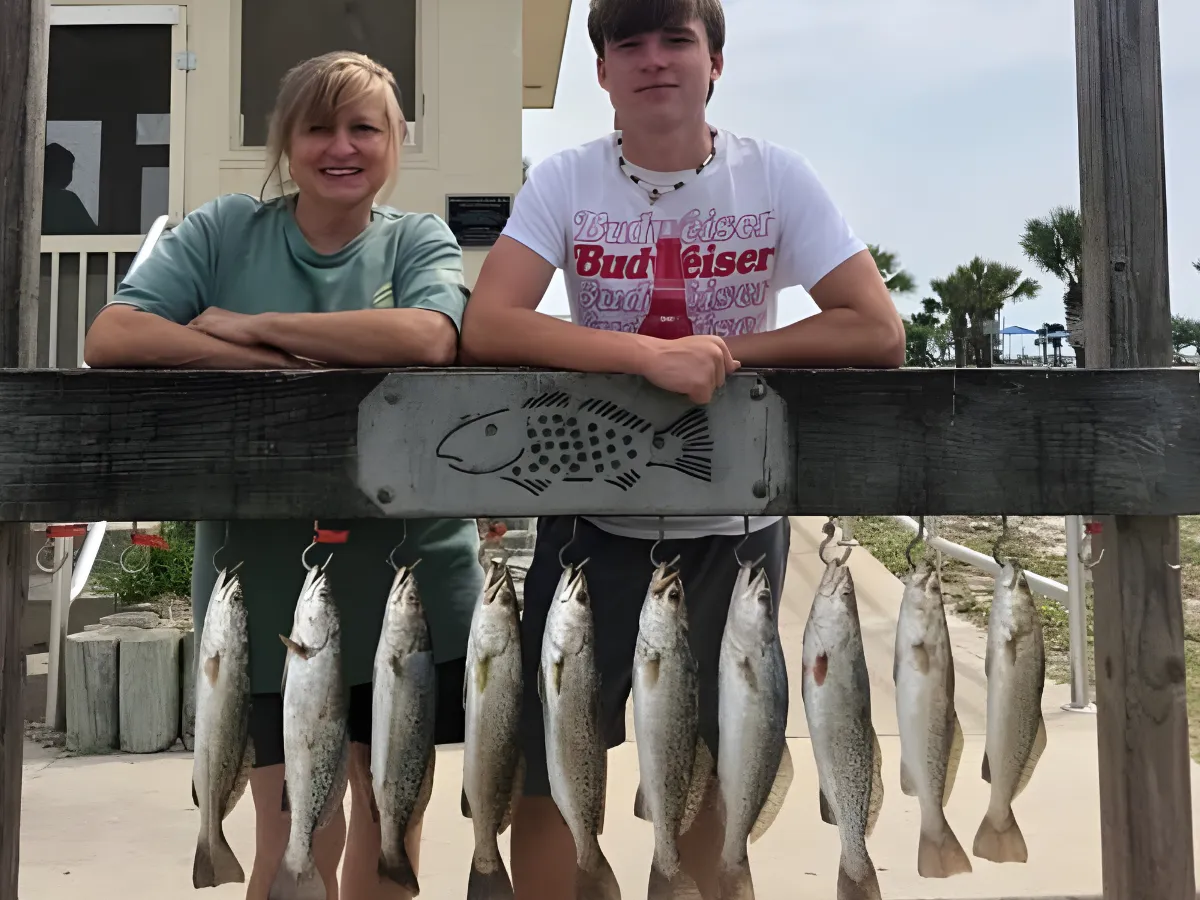
What makes trout different
Redfish will forgive a sloppy cast. Trout won’t. They sit in the water column rather than on the bottom, they respond to how a lure moves more than to what it looks like, and a two-second change in retrieve speed can be the difference between a fish and nothing.
That sounds like a warning. It isn’t. It’s the reason people who fish a lot end up preferring them, and it’s a skill you can pick up in a morning if someone shows you what to feel for.
The other thing about trout is the first hour. On a calm morning over grass, a topwater lure worked slowly across the surface will get hit hard enough to make people jump. That’s the single best thing that happens on our boat and it’s worth the early start.
Where we look for them
Grass beds and the potholes in them. Trout sit over the grass or along the sand edges beside it, and the potholes, sandy patches surrounded by grass, concentrate them in a way that’s useful when you’re trying to cover water.
Around Port Aransas that means the flats through Redfish Bay and Estes Flats, and the shorelines tucked behind Mustang Island when the wind’s up. Slicks are the giveaway. When trout feed they leave an oily patch on the surface with a distinct smell, and finding one usually means finding fish beneath it.
Structure matters more than it looks like it should. A grass line that runs at an angle to the current, a sand hole on the edge of a flat, a spoil bank beside a channel: all of them give trout somewhere to sit while bait comes past. We fish the edges of things rather than the middle of them.
Bigger trout behave differently from schoolies. They’re more solitary, they hold tighter to structure, and they’re more likely to be caught by someone working slowly and deliberately than by someone covering ground.

How we fish for them
Topwater first if the conditions allow, because that’s the bite everyone remembers. When the sun gets up and the surface bite fades, we drop to soft plastics on a light jighead and work the drop-offs.
A popping cork earns its place here. The pop imitates feeding activity and calls fish in from a distance, and it holds a bait at a set depth, which makes it much easier for someone new to keep a lure where the fish actually are. If the bite turns picky, live bait under the same cork usually sorts it.
Water clarity drives the whole approach. Clear water means lighter leaders, more natural colours, and longer casts, because the fish can see you as well as the lure. Stained water means slowing down, going noisier, and letting scent and vibration do the work instead of sight. We’ll read that on the morning and rig accordingly.
Wading suits trout more than most species. Getting out of the boat lets you work a grass edge quietly and thoroughly instead of drifting past it once. It’s optional, and the bottom needs to suit it, but if you’re serious about trout it’s worth doing.
What you can keep
Trout rules in Texas have changed more than once in recent years, so it’s worth knowing the current position rather than the one you remember.
The daily bag is three fish per angler, and a keeper measures between fifteen and twenty inches. Above that slot, the threshold is twenty-eight inches, not thirty as it used to be. Each licence year you’re allowed one trout over twenty-eight inches on a Spotted Seatrout Tag, and a second on a Bonus Tag, both in addition to the daily bag.
That twenty-eight inch figure catches people out regularly, because the older thirty-inch rule stuck in a lot of memories. We’ll measure anything close. The seatrout bag and length limits are published by Texas Parks and Wildlife and do change, so check them before you come.

Trout through the year
Spring and early summer are the most consistent stretch, with fish spread across the shallow grass and good light for working topwater. Summer narrows to the first hour and the last, then pushes trout into deeper lanes as the day heats up.
Autumn brings bigger fish onto the shorelines. Winter is the technical season: fewer fish, fewer boats, slower presentations, and a genuine chance at something large for anyone willing to work for it. There’s more in our guide to the year in more detail.
What else comes along
A trout morning rarely stays a trout morning. Redfish on the same tide turn up on the same grass edges, black drum for a steadier bite sit deeper when the shallow water goes quiet, and flounder along those edges hold where the bottom changes.
We fish inshore only. Anything beyond the bays isn’t our trip and we’ll point you to the boats that run it.

Trout on the rest of the coast
Clear water down at Corpus Christi gives the best sight-fishing conditions we have, which suits trout when the light is right. Aransas Bay grass at Rockport brings shell and reef edges into the mix. The grass out of Aransas Pass is shallow and protected on a windy forecast.
There’s more on our Port Aransas water if you want the fuller picture of fishing here.
Common questions about speckled trout
What size trout can we keep?
Fifteen to twenty inches, three per angler per day. Above the slot, one fish over twenty-eight inches per licence year on a Spotted Seatrout Tag and a second on a Bonus Tag. The threshold is twenty-eight, not thirty, which trips up anglers working from memory.
What is a slick and why do you look for them?
When trout feed they leave an oily patch on the surface that you can see and often smell. A fresh slick the size of a dinner plate usually means fish actively feeding underneath. We’ll set up on the upwind side and work it.
Is the topwater bite worth an early start?
We think so. The window is the first hour or so of light on a calm morning over grass, and a trout hitting a surface lure is the most exciting thing that happens on this boat. It doesn’t happen every day, but you can’t catch it at ten o’clock.
Should we wade or stay on the boat?
Either works. Wading lets you cover a grass edge slowly and quietly, which suits trout, so we’d suggest it if the bottom is firm and you’re comfortable. If you’d rather stay dry, drifting catches plenty.
Are trout harder to catch than redfish?
Less forgiving, yes. They care more about presentation and they’re fussier about speed. That’s exactly why some people prefer them, and why we’ll often start a mixed group on redfish and move to trout once everyone’s found their rhythm.
Do you use live bait or lures?
Both, and we switch based on the water. Artificials cover ground and suit a topwater morning; live bait under a popping cork sorts out a picky bite or a group that would rather not think about retrieve speed. All of it’s provided.
Book a trout trip
Tell us your dates and whether you want the early topwater window or a more relaxed start. See what a trip runs, then book a trout morning or call Captain Charlie on (361) 946-5290.