
Flounder and Night Gigging Around Port Aransas
Flounder are the patient fish. They lie flat on the bottom where it changes, wait for something to swim past, and eat without much ceremony. Catching them is less about casting well than about noticing when something has gone slightly heavy on the end of your line.
They’re also the best eating out of these bays. Here’s how we fish for them, and the one rule that decides when you can take them home. How we work covers the wider operation and the four we target compares the species.
Book Fishing Trip
The closed season, first
Texas closes flounder harvest every year from the first of November to the fourteenth of December. During those six weeks the bag limit is zero and no method of take is legal, rod and reel or gigging. It isn’t a guideline and there’s no exemption for charters.
That window sits right inside the autumn run, which catches people out. Flounder move through the passes to spawn in exactly that stretch, which is why they’re protected then and why they’d otherwise be so easy to take.
We’ll still take you fishing for them and release what you catch, and plenty of people enjoy that. But if fillets are the point of the trip, book either side of the closure. October and mid-December onward both work. The flounder bag and length limits are published by Texas Parks and Wildlife and worth checking as you plan.
What you can keep the rest of the year
Outside the closure the daily bag is five fish per angler with a fifteen-inch minimum and no maximum. Five flounder is a serious amount of dinner, which is why groups who want to take fish home often build the day around them.
The rules apply to southern flounder, gulf flounder, and hybrids alike, so there’s no need to identify which one you’ve landed before deciding. We measure anything close to fifteen inches rather than guessing.
Where they sit
Transitions. Sand to mud, mud to shell, the edge of a grass bed, the mouth of a drain. Flounder don’t chase, so they position where food gets delivered to them and let the current do the work.
Around Port Aransas that means the drains along the marsh shorelines, the sand pockets beside the channels, and the cuts through Redfish Bay. In autumn the passes and the jetty edges concentrate fish as they move toward the Gulf, which is the run everybody talks about.
Structure beats open ground every time with this species. A drain mouth that dumps into slightly deeper water, a sand pocket on the inside of a bend, the lip where a flat drops away: those are the spots worth working slowly rather than covering quickly.
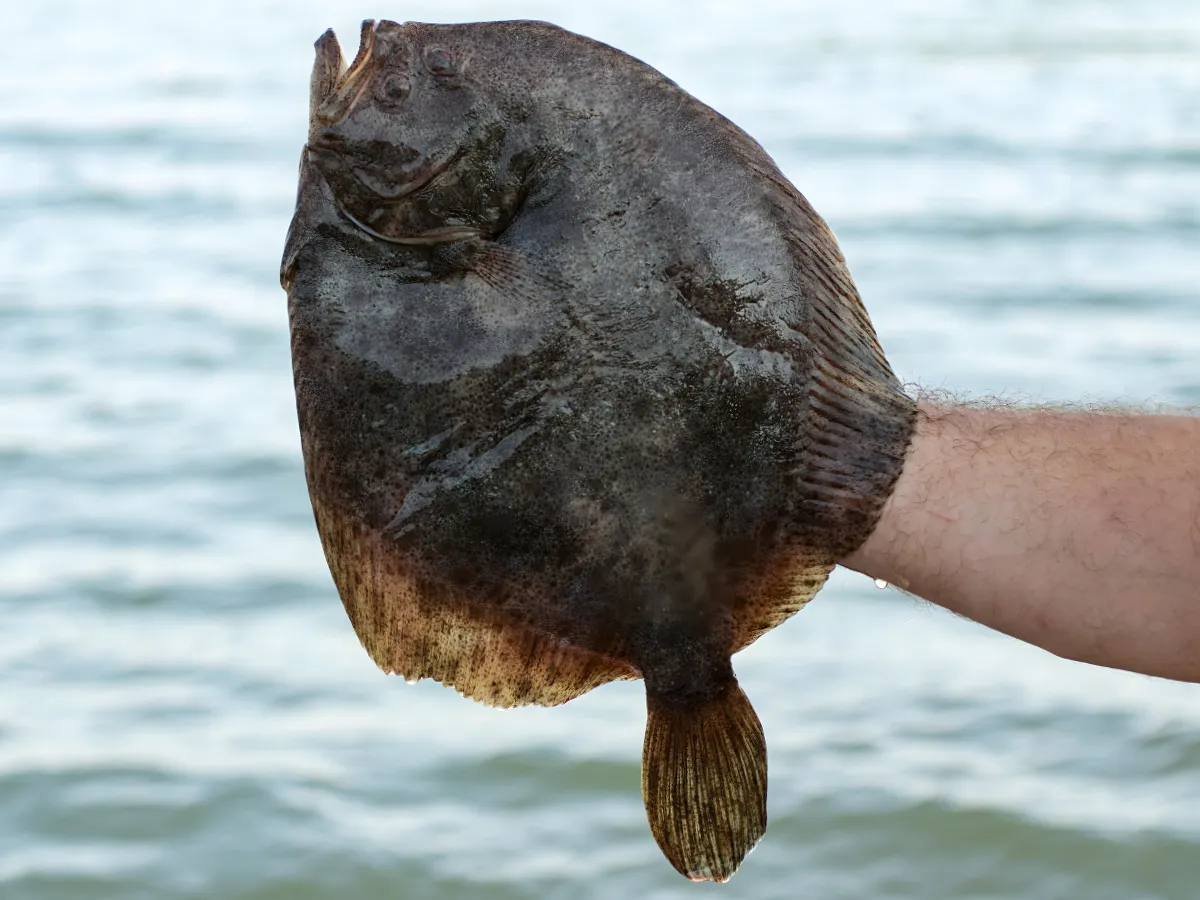
They bury themselves, which is worth knowing. A flounder sitting in the sand with only its eyes showing is invisible until it moves, so the fish you catch are often ones you had no idea were there.

How the bite works
This is the part that costs people fish. A flounder doesn’t strike. It takes the bait and settles back down, so what you feel is weight arriving rather than a pull, and it’s easy to mistake for the bottom.
The instinct is to snatch. Don’t. Stop the retrieve, let the fish take it properly, then lift smoothly and keep the pressure steady. With a circle hook you never set at all, you just lift and reel. It takes one or two lost fish before it clicks, and once it does you’ll wonder how you ever missed them.
Live shrimp and mud minnows are the easiest baits to fish. Finger mullet works when bait is thick on a falling tide. Soft plastics on a jighead do well when we want to cover ground, hopped slowly along the bottom rather than swum through the water.
Night gigging
Gigging is a genuinely different trip. We run shallow across the flats and marsh edges at night with lights on the water, looking for the outline of a fish on the bottom. When we find one we check the depth and the angle before anything happens.
It needs the right conditions. Calm water, decent clarity, and a settled forecast, and we won’t run it if visibility is poor. Everyone wears a life jacket and we go through footing and balance at the dock before we leave.
The same closure applies. Gigging is a method of take, so from the first of November to the fourteenth of December it stops along with everything else. Ask us about dates and we’ll tell you honestly what’s available.

Through the year
Flounder are around most of the year but they’re not evenly spread. Spring and summer see them distributed across the bays and marshes, and patient work along drains and flats produces steadily. Autumn concentrates them at the passes as they move out, which is the strongest fishing and the most restricted.
Winter after the closure lifts can be very good and it’s quiet on the water. Our guide to what runs when sets out the wider calendar.
What else we catch alongside
Flounder fishing is slow by design, so we’ll often mix it. Redfish on the shallow edges keep the pace up, trout over the grass beds suit the first hour of light, and black drum through the winter sit on the same bottom with a bigger appetite.
We fish inshore only and we’ll point you elsewhere for anything beyond the bays.
Flounder elsewhere on the coast
The Aransas Pass drains hold fish on the same transitions a short run from the ramp. North around Rockport the shell and marsh edges of Aransas Bay work well. The Corpus Christi side brings Packery and the Oso drains into play.
There’s more on fishing around Port Aransas generally if you want the fuller picture.
Common questions about flounder
When is flounder season closed in Texas?
From the first of November to the fourteenth of December every year. The bag limit drops to zero and no method of take is legal during that window, including gigging. It resets on the fifteenth of December.
Can we still fish for flounder during the closure?
You can catch them and release them. What you can’t do is keep any, by any method. If the trip is about dinner, book either side of the six weeks and we’ll tell you which dates work.
What size flounder can we keep?
Fifteen inches minimum with no maximum, five per angler per day when the season is open. That applies to southern flounder, gulf flounder, and hybrids together, so you don’t need to tell them apart.
What is flounder gigging?
Working shallow water at night with lights, spotting fish on the bottom and taking them with a gig rather than a rod. It needs calm, clear conditions, and we won’t run it when visibility is poor. It’s also closed during the same six weeks as rod-and-reel harvest.
Why is the bite so hard to feel?
Because a flounder settles onto a bait instead of hitting it. You feel weight arriving rather than a strike, which reads a lot like the bottom. Stopping, waiting, then lifting smoothly is the whole technique, and it takes a couple of missed fish to learn.
Are flounder good to eat?
The best out of these bays, in our view. Mild, white, and easy to cook, and five keepers is a proper meal for a family. It’s the main reason people plan a trip around them.
Book a flounder trip
Tell us your dates and whether you want daytime casting, a night gigging trip, or a mix. We’ll be straight about whether the closure affects your dates. Check day and night trip lengths, then book a flounder trip or call Captain Charlie on (361) 946-5290.