
Bay and Inshore Fishing Charters in Aransas Pass, TX
C&T Bay Charters works as Aransas Pass fishing guides on Redfish Bay and the channels around it. The town sits right on the edge of the shallows, so the run to fishable water is short and you get more of your morning on the rod.
If you’re basing yourself in Aransas Pass, this page covers what fishing here looks like. How our trips work explains the wider Coastal Bend operation.
Book Fishing Trip
Why Aransas Pass is easy water to fish
Aransas Pass sits between Redfish Bay, the ship channel, and the routes running out toward Port Aransas and Corpus Christi. That position is the whole advantage. You’re a few minutes from protected shallows in one direction and deeper channel water in the other, and switching between them costs almost no running time.
The town’s ramps put you straight into that system. Conn Brown Harbor is the one most visitors know, with the public ramp at Harbor Point Park sitting where the harbour, the Aransas Channel, and the Intracoastal Waterway all meet. The water behind it is grass, shell, and drain, which is exactly what holds bait.
Conn Brown is a working harbour as much as a launch. Shrimp boats have run out of Aransas Pass to the Gulf for generations and they still tie up along the bulkhead, so the place has a different feel from a resort marina. There are bait stands right by the ramps, which is handy on a morning when live bait is the difference between a slow start and a good one.
It’s forgiving water too. When the wind comes up, there’s almost always a shoreline or a cut sheltered enough to keep fishing, which is why we rate Aransas Pass highly for groups with kids or first-timers aboard.
Redfish Bay, the heart of it
Redfish Bay is shallow, grassy, and full of structure. Potholes in the grass, shell points, and the drains between them all concentrate bait once the tide starts moving, and the fish set up accordingly.
On high water we push shallow and look along flooded shorelines. On a falling tide we sit on the drains where bait gets funnelled through narrow lanes. It’s a straightforward system to read once someone shows you, and it’s a good place to learn because the fish are usually close.
The Aransas Channel and the ship channel edges give us somewhere to go when the shallows are quiet. Deeper water, more current, and fish holding on the seams rather than spread across a flat.
At Conn Brown the harbour, the Aransas Channel, and the Intracoastal Waterway all meet. That junction moves a lot of bait once the tide is running, and it’s one of the few places on this stretch where you can fish skinny grass and moving channel water on the same trip without a long ride between them.
Redfish Bay is also a State Scientific Area, which is why we fish it the way we do. Texas Parks and Wildlife designated it in 2000 to protect the seagrass, and since 2006 it’s been unlawful to uproot rooted seagrass with a submerged propeller. Nothing is closed to boats, but it does mean lifting the motor, drifting, poling, or running the trolling motor once we’re shallow. If you’ve wondered why a guide shuts the outboard down early here, that’s the reason. The Redfish Bay State Scientific Area rules set out what the regulation covers.
It’s also why wading matters more in this bay than in some others. Once we’re off the motor, poling or stepping out is often the cleanest way to work a flat without tearing it up, and the bottom through much of Redfish Bay is firm enough to do it comfortably. If you’d rather stay aboard, the trolling motor covers the same ground.
What we target here
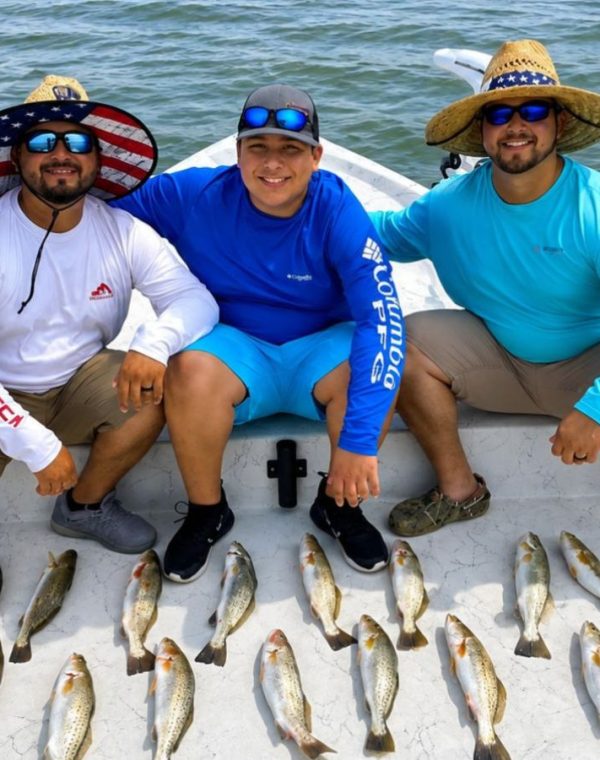
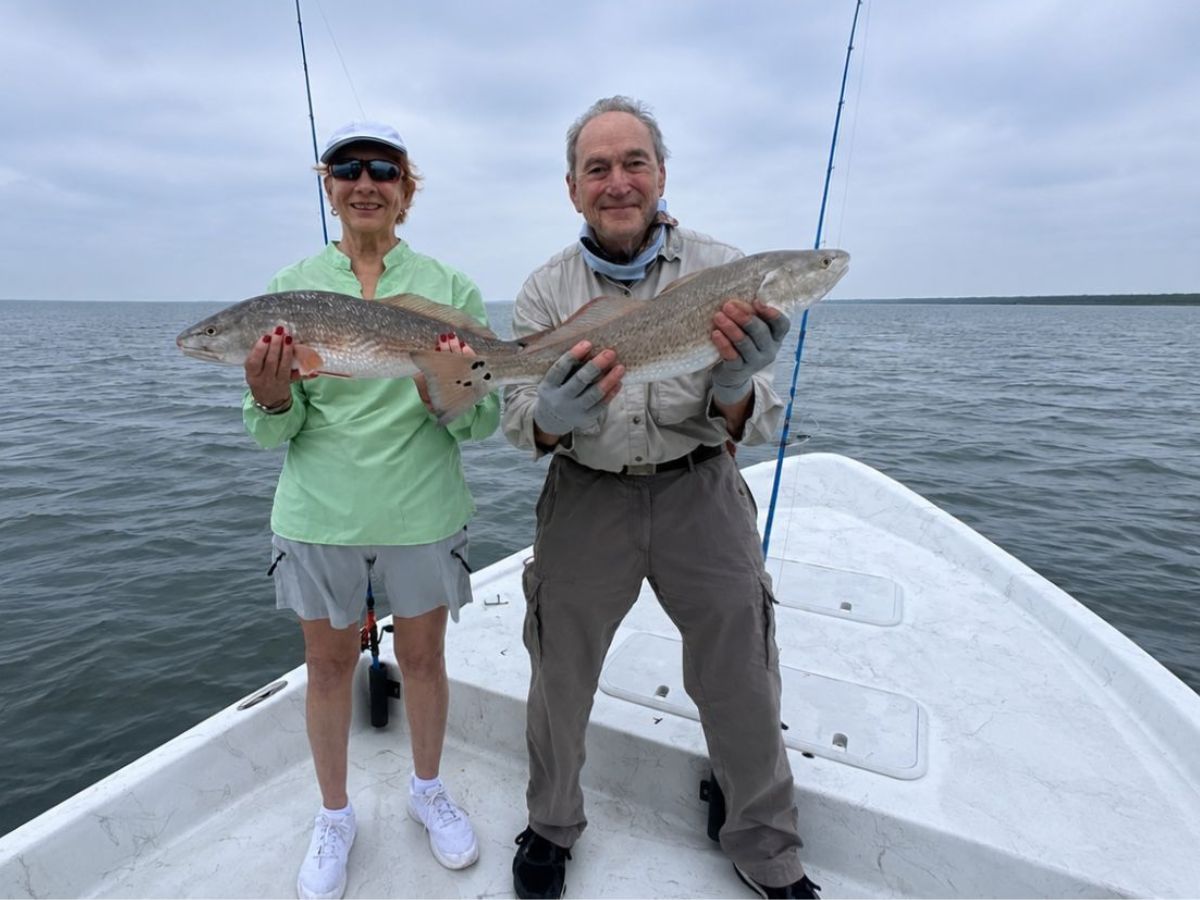
Redfish in the shallows are the reason most people book Aransas Pass. Shell points and shorelines on a moving tide, and the bay is named after them for good reason.
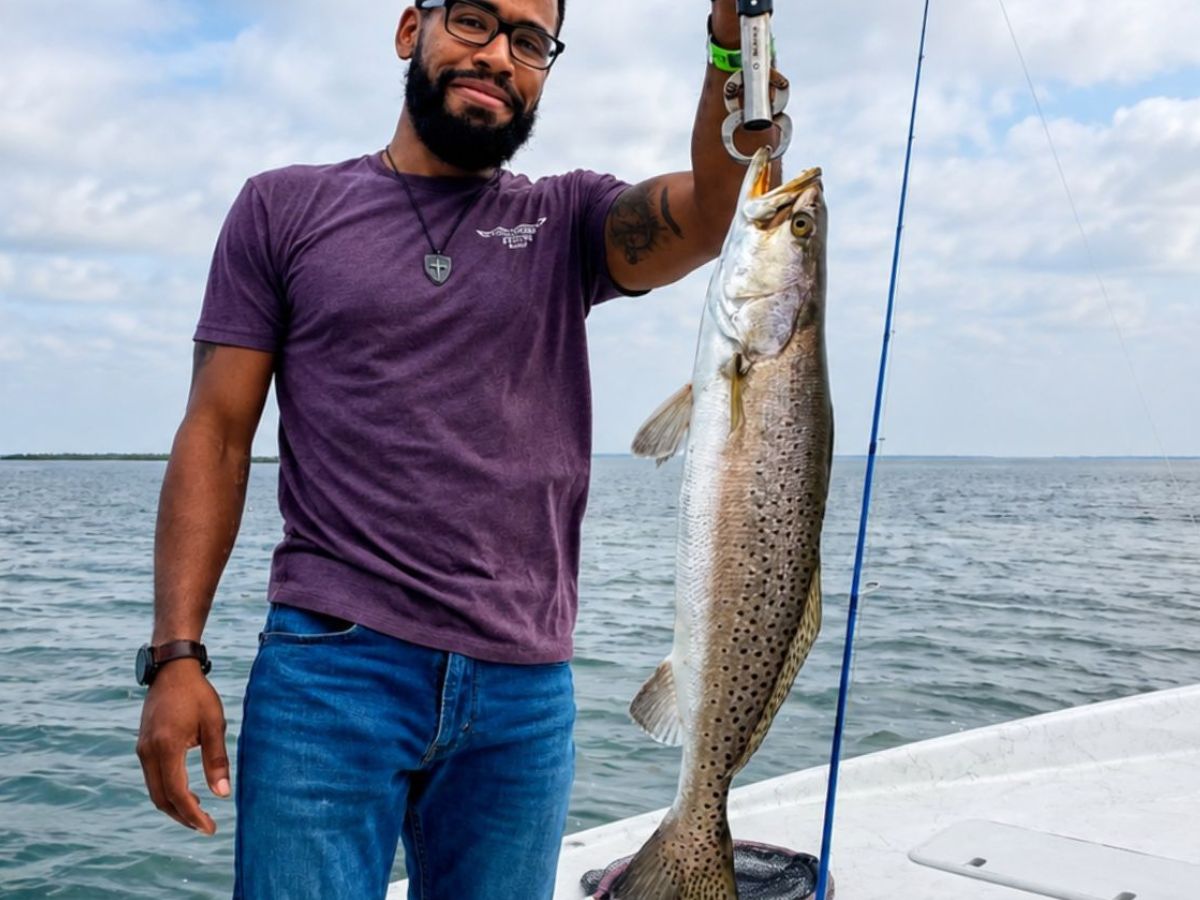
Speckled trout on the grass beds sit over the potholes and along the grass-to-sand edges. Early is better.
Flounder in the drains hold where the bottom changes and the water moves through. Slow presentation, patient hands.
Black drum along the channels work the deeper edges and keep the rod loaded when the shallow bite goes quiet.
Trips out of Aransas Pass
Half days run about five hours on the water, full days about eight. Rods, reels, tackle, ice, fuel, and live bait when it’s available are included, and we clean and bag your legal fish afterwards.
Because the runs are short here, a half day out of Aransas Pass covers more water than a half day usually does. That’s worth knowing if you’re weighing the two. You can see how trip pricing works in full, and there’s a gear list so nothing gets forgotten.
Timing your trip
Spring and early summer are consistent, with trout on the grass and redfish along the shorelines. Summer means early starts. Autumn concentrates bait in the drains and the flounder move through. Winter is slower, clearer, and much quieter on the water.
The channels change the picture in the colder months. When the shallows cool off, fish drop into the deeper cuts and the drains that feed them, so a winter trip here often means working edges rather than flats. That is a shorter run from Aransas Pass than it is from most of the towns on this coast.
Redfish Bay fishes year round because it’s protected. That’s the practical case for Aransas Pass over somewhere more exposed in the colder months. Our guide to when each species runs has the month-by-month detail.
Fishing elsewhere on the Coastal Bend
We fish four ports and we’ll move if the conditions say so.
The island side at Port Aransas opens up the jetties and the channel edges. Rockport and Copano Bay give sheltered marsh water further north. Corpus Christi and Oso Bay bring long grass flats and a different set of shorelines.
Common questions about fishing Aransas Pass
Which ramp do we meet at in Aransas Pass?
Aransas Pass has several public ramps with quick access to Redfish Bay, and we pick based on the plan and the tide. Conn Brown Harbor and its Harbor Point Park ramp is the landmark most people know. We’ll text you the exact meeting point the evening before.
Is Aransas Pass a good place for a first fishing trip?
It’s one of the better ones on this coast. The water is shallow and protected, the runs are short, and Redfish Bay holds fish close enough that beginners aren’t spending the morning riding. We rig simple and keep the casting easy.
What is Redfish Bay like to fish?
Shallow and grassy, with potholes and shell points scattered through it. The structure concentrates bait once the tide moves, so the fish are predictable in a way that open water isn’t. It’s a good bay to learn to read.
What are the seagrass rules in Redfish Bay?
Redfish Bay is a State Scientific Area and it’s against the law to uproot rooted seagrass with a submerged propeller. No part of the bay is closed and anchoring and trolling motors are fine. In practice we lift, drift, pole, or troll once the water gets thin, and we watch that the prop wash stays white rather than brown.
Does the ship channel traffic affect the fishing?
Not much, and we plan around it. The channel is a working waterway with real traffic, so we fish its edges and seams rather than sitting in the lane. The wake and the current it pushes can actually help the bite along the drop-offs.
Can we fish toward Corpus Christi Bay from Aransas Pass?
On the right day, yes. The routes out of Aransas Pass touch the upper Corpus Christi system, so if that side is fishing better we can work our way down. It depends on wind and how much running time you want to spend.
Book an Aransas Pass charter
Send your dates, group size, and what you’re hoping to catch. Hold a date, or call Captain Charlie on (361) 946-5290. For town information, the City of Aransas Pass site is a useful reference.